NEW: SG AI – Your AI Assistant for TYPO3 – SEO, (image-)text, images & more!


Digital Accessibility
Accessible TYPO3 websites in accordance with WCAG and EN 301 549 — technically sound, implemented in compliance with the law, and accessible to all users.
Accessible TYPO3 websites in accordance with WCAG and EN 301 549 — technically sound, implemented in compliance with the law, and accessible to all users.
Digital accessibility means much more than simply meeting legal requirements. It ensures that websites and applications remain accessible and easy to use for as many people as possible.
We help companies analyze existing TYPO3 projects, remove barriers, and develop new websites to be accessible from the start—including modern accessibility features and long-term support.
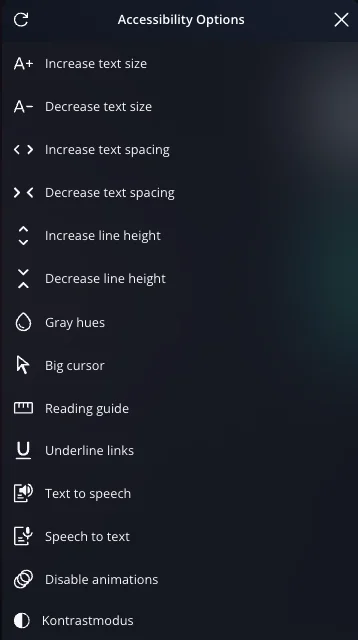
Flexible accessibility tools right on your website
Our accessibility solution allows visitors to customize your website to their individual needs—without browser extensions or additional software.
Among other things, the following features are available:
Adjust font size and text spacing
Change line height
Contrast and grayscale modes
Large mouse pointer
Reading Aid
Highlight links
Read-aloud feature
Voice control
Reduce animations
All features can be individually configured and customized to match your corporate design.
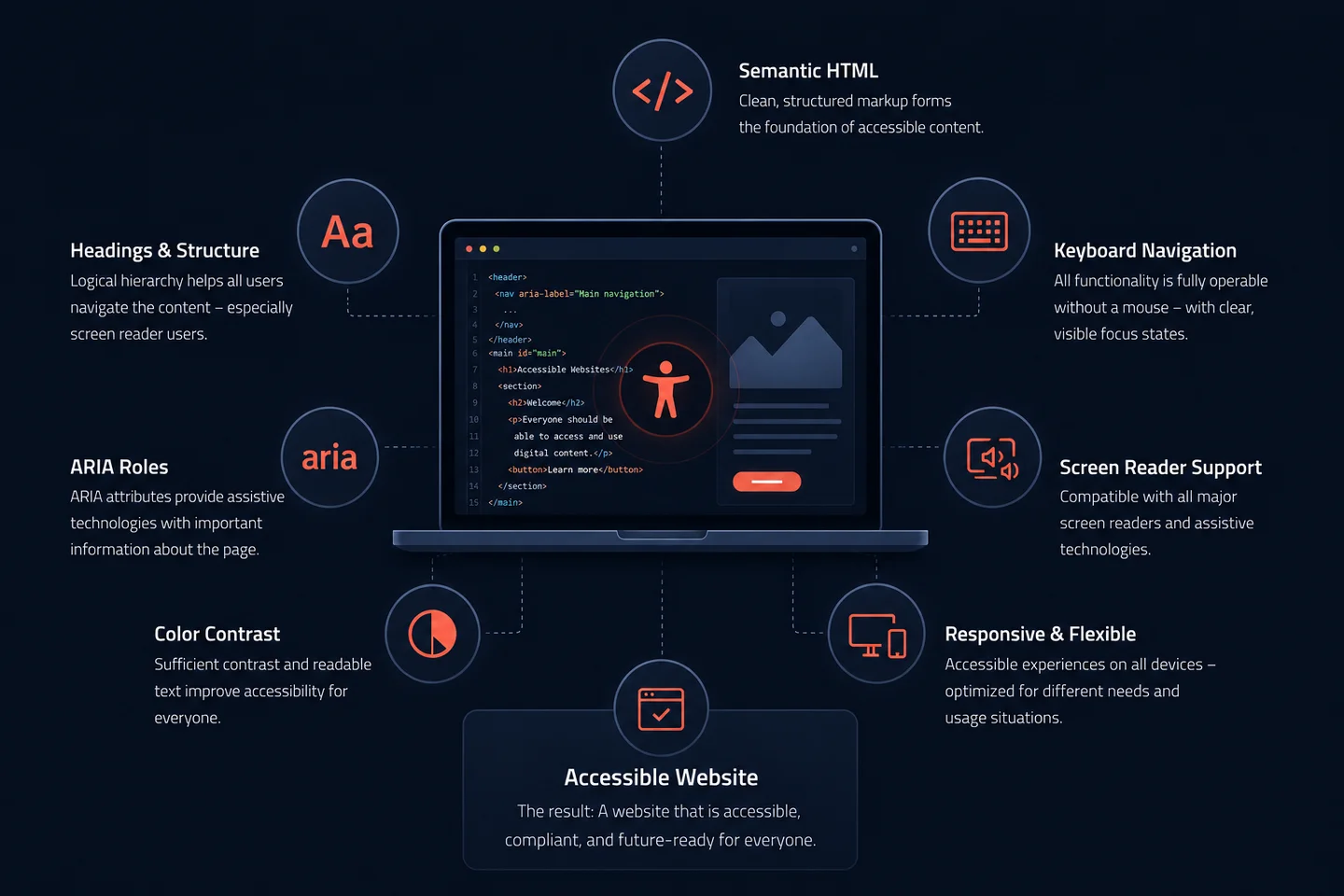
Accessibility starts with the code
Accessibility doesn't end with an accessibility menu.
Even during development and testing, we pay attention to:
Semantic HTML
Correct heading structure
ARIA roles
Full keyboard navigation
Visible focus states
Screen reader compatibility
Adequate color contrast
Responsive usability
①
Audit
Analysis of the existing website.
②
Analysis
Prioritization of all measures.
③
Implementation
Accessible development.
④
Testing
Keyboard, screen reader, WCAG.
⑤
Launch
Go-live.
⑥
Support
Continuous optimization.
Accessibility in Practice
We don't just implement digital accessibility in theory; we integrate it directly into real-world TYPO3 projects—from accessible components and clear focus states to custom accessibility features.